
- News
- City News
- bhopal News
- Tasting haleem in the city
Trending
This story is from June 11, 2016
Tasting haleem in the city
The month of Ramadan is here and come evening, the lanes in the Old City area of Bhopal are buzzing with food enthusiasts looking for iftar or the evening meal that marks the end of the day’s fast.
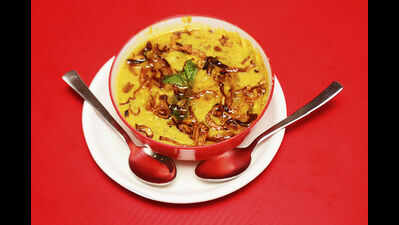
The month of Ramadan is here and come evening, the lanes in the Old City area of Bhopal are buzzing with food enthusiasts looking for iftar or the evening meal that marks the end of the day’s fast.


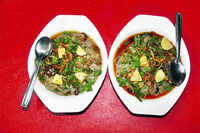
“It is one of the healthiest dishes to consume after a day’s fast,” says Sajid Khan, owner of an outlet in Jehangirabad, about the dish made with meat, lentils and pounded wheat. “We have been serving haleem for over 10 years and ensure that its authentic taste isn’t disturbed. The preparation of haleem starts in the morning and winds up only at the end of the day,” Sajid adds.
Abdul Rehman, who owns an outlet near Lilly Talkies, says, “If it is to be made in a large quantity, three people are needed to keep stirring from time to time. The ingredients include chicken, barley, pulses, spices and ghee, because haleem is not made with oil. It is then garnished with fried onions, green coriander and mint.” Haleem finds its place on iftar menus owing to its fortifying nature. It is often made during community dinners, and accompanied with tandoori rotis or naan. Sohail Khan, a customer says, “I prefer having haleem with a naan and it’s a complete meal for me. A bowl of haleem is something I really look forward to during Ramadan.”
Anwar Khan, who has been serving chicken haleem for the past eight years, explains, “The dish is high in calories and provides instant energy with fast burning ingredients that are heavy and nutritious.” Fehriq Khan a customer and a haleem lover agrees, “When you have all the goodness of fibre from the wheat and pulses combined with slow cooked proteins, it is a healthy and a wholesome treat.” Another customer, Ahmad Khan says, “It’s too laborious to cook at home, so, we turn up in Jehangirabad to enjoy this dish after the day’s fast. The dish is very nutritious and a significant source of calcium.”
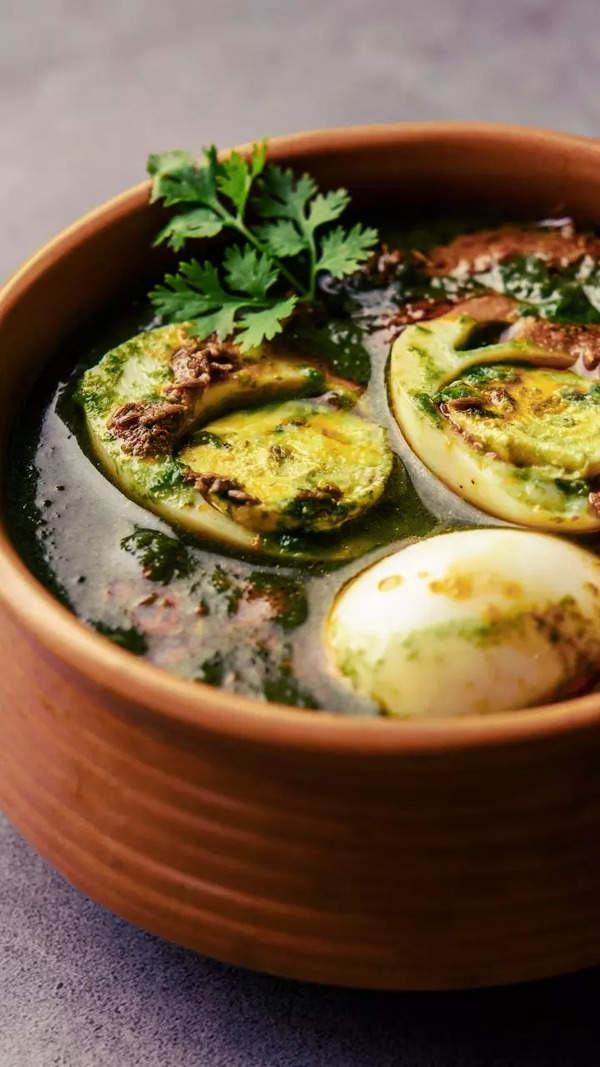
Needless to say, the demand for the dish shoots up during Ramadan and places that offer the dish believe that it is preferred due to its healthy ingredients. Mohammad Adil, who owns a restaurant in the Old City area says, “After fasting, one would want to go in for something that is not just satisfying, but healthy too. Those who fast suffer from weight loss, and haleem helps maintain weight too.” Served with fried onions, mint and a dash of lemon juice, a half plate of haleem is priced around Rs 40 a bowl.
Sale of 'Haleem' picks up during Ramadan
End of Article
FOLLOW US ON SOCIAL MEDIA








Hot Picks
TOP TRENDING
Popular Categories
Hot on the Web
Top Trends
Israel Hezbollah WarTirupati Laddu Case HearingKolkata Doctor Rape HearingIND vs BAN Live ScoreRohit SharmaIftikhar AhmedMayank YadavUGC NET Result 2024TS DSC Results 2024Women T20 World Cup Points TableWomen T20 World Cup ScheduleShane McMahon Net WorthHezbollah ChiefEarth Mini MoonDiddyTop Management Colleges of IndiaLive Cricket Score
Trending Topics
Devara CollectionMithun ChakrabortyKangana RanautPark Ji AhStree 2 OTT ReleaseAnant AmbaniDevara CollectionOTT Release MovieMasala OmeletteEmergencyDevaraTaaza Khabar 2 Twitter ReviewDevara Movie ReviewHealthy RaitasSwatantrya Veer SavarkarColdplay India tour 2025Smartphone DealsApple Macbook Air M1Amazon SaleWordle Answer
Living and entertainment
Latest News
The Power of Color: Zodiac Signs and Their Energetic Hues'For the next 10 years, we've got players who will make our country proud' says VVS Laxman on bench strengthSasikumar and Simran join hands for a feel-good, city-based entertainerAishwarya Rai Bachchan touches Nandamuri Balakrishna's feet as a sign of respect, the Telugu star blesses herCovid lockdown on earth led to dip in Moon's temperature: StudyQueen Camilla does not want King Charles to meet Prince Harry because...From A.R. Rahman to Satyajit Ray: Indian Oscar winners who made historyWatch: Jasprit Bumrah’s lethal inswinger shatters Mushfiqur Rahim’s off stumpManipur CM Biren accuses Kuki militants of abducting 2 Manipuri youthsPaul Heyman opens up on declining TNA offer after leaving WWEFun-filled inside pictures from Inaaya Naumi’s 7th birthday party with Kareena Kapoor, Saif Ali Khan, Taimur, Jeh, Soha, Kunal Kemmu and more family membersIndia to maintain LAC troop deployment as trust deficit with China remainsBCCI's Centre of Excellence opens up new possibilitiesBigg Boss 18 Promo: Salman Khan reveals the theme of the season by predicting the contestants' future in the houseIndia’s choking beyond Delhi: Byrnihat shows we have a big unnoticed pollution problemHow NFL Players Juggle Family Life and a Demanding CareerThe Role of Family Support in the Success of NFL Players"I feel terrible for Rashee": Chiefs Coach Andy Reid offers insight into Rashee Rice’s knee status post-win
Copyright © 2024 Bennett, Coleman & Co. Ltd. All rights reserved. For reprint rights: Times Syndication Service